
For most families, the Noida–Ghaziabad decision is less about city image and more about how daily life will actually work. Gautam Buddh Nagar district, which includes Noida, reports a population of about 16.48 lakh across 1,442 sq. km, while Ghaziabad district reports roughly 34.06 lakh people. That difference matters because one market is often read through planning and expansion, while the other is shaped by scale, density, and established urban movement.
Noida tends to appeal to families who value structured urban form and expanding transit. The Aqua Line currently runs across 21 stations over 29.7 km, and NMRC has also planned new extensions including an 11.56 km Botanical Garden link with 8 stations and a 17.435 km extension toward Knowledge Park V with 11 stations. On top of that, Noida International Airport Phase I was inaugurated in March 2026 with an initial capacity of 12 million passengers per year, adding another layer to Noida’s long-term connectivity story.
Ghaziabad, on the other hand, often feels more practical to families prioritising access across a larger, already active urban belt. The city now sits on the Delhi–Ghaziabad–Meerut Namo Bharat corridor, and NCRTC says the full operational network is functioning with 23 stations across the integrated section, while Ghaziabad station itself is positioned as a future interchange for additional regional routes. That gives Ghaziabad a different kind of advantage: not always the same planning language as Noida, but strong everyday movement, scale, and wider regional reach.
Choosing Between Noida and Ghaziabad for Better Living Today
Noida A More Structured and Premium Residential Choice
Noida has built a strong reputation for planned growth and organised urban structure. Wide roads, sector-based layout, and consistent zoning make many parts of the city easier to navigate and live in. Over time, this has attracted working professionals and buyers who prefer a more ordered residential environment.
Infrastructure is one of the city’s biggest strengths. The Noida–Greater Noida Expressway, expanding metro network, and upcoming airport continue to influence long-term location value. In recent years, several parts of Noida have seen noticeable price movement, with some pockets reporting around 15–18% growth, especially in expressway-linked sectors and newer residential belts.
Locations such as Sector 150, Sector 137, and nearby expressway areas are often discussed because they combine residential comfort with access to offices, schools, and daily essentials. For many buyers, the appeal lies not only in premium projects, but also in how the city supports smoother routines and future readiness.
Why Some Buyers Lean Toward Noida
- Planned sectors with clearer layout
- Strong office and IT corridor presence
- Expanding metro and expressway connectivity
- Growing interest in premium housing
- Visible long-term development direction
Ghaziabad Practical Value with Expanding Everyday Comfort
Ghaziabad offers a different kind of strength. For many buyers, its biggest advantage is the amount of usable space available within a similar budget. Compared to Noida, property prices in several Ghaziabad locations are often 20–30% lower, making it easier to consider a larger home without overextending financially.
The city has also seen steady improvement in connectivity. NH-9, metro access, and the Namo Bharat corridor are gradually improving movement across NCR. Areas such as Indirapuram, Raj Nagar Extension, and Siddharth Vihar have developed into stronger residential pockets where schools, hospitals, and daily-use services are already active and accessible.
This gives Ghaziabad a more immediate sense of usability. Instead of waiting for future development, many neighbourhoods already support everyday routines with comfort. Recent estimates suggest the market may see around 10–12% growth, supported by ongoing infrastructure upgrades and stable housing demand.
Why Ghaziabad Works for Many Buyers
- Better space within a similar budget
- Established residential areas with ready infrastructure
- Improving metro and regional connectivity
- Steady demand in mid-segment housing
- Practical living with lower entry cost
Noida or Ghaziabad for More Practical Family Living
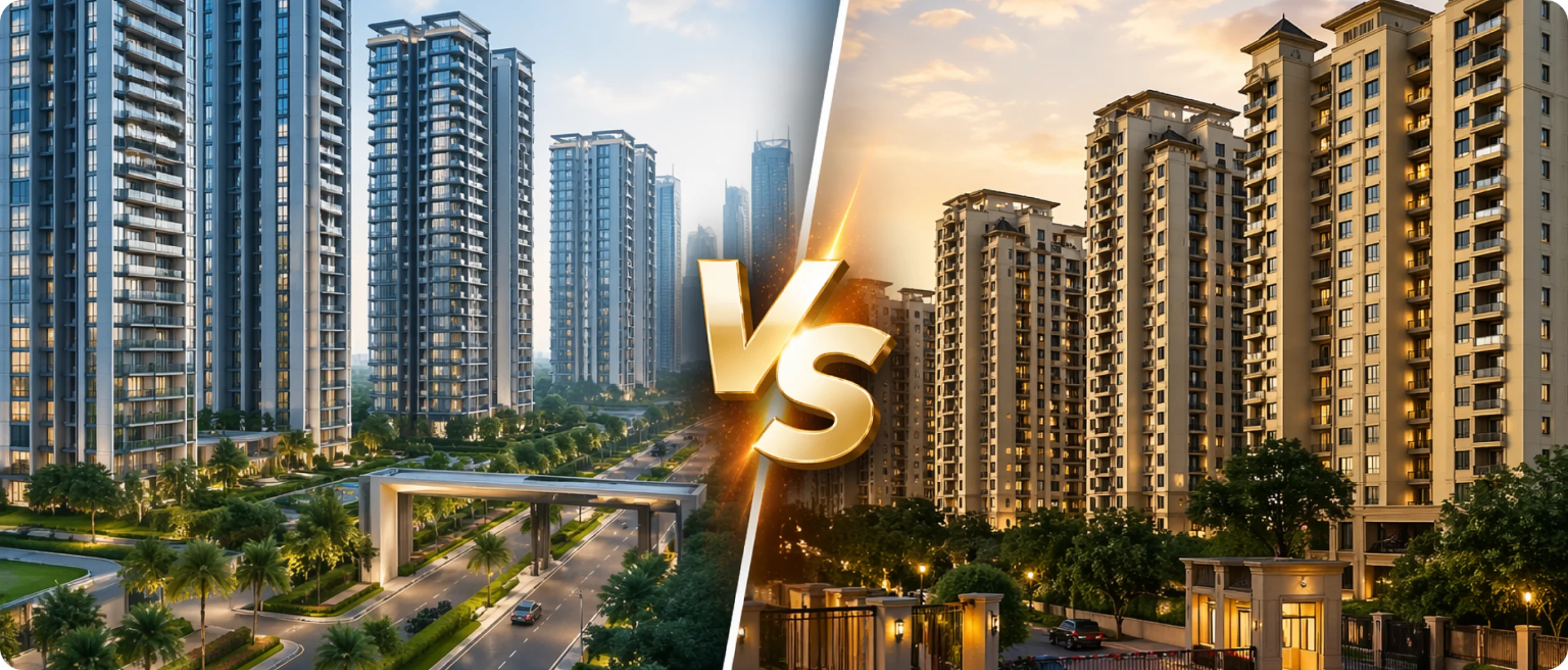
|
Comparison Area |
Noida |
Ghaziabad |
|
Urban Form |
Planned sectors, broader roads, and more consistent zoning give many parts of Noida a cleaner residential rhythm. |
Its fabric is more uneven, but several pockets now feel far more settled, connected, and liveable than they did a few years ago. |
|
Everyday Family Comfort |
In the right sectors, daily life often feels more orderly, with less visual clutter and a stronger sense of spatial balance. |
Many families prefer it for a different reason: active neighbourhoods, familiar movement, and surroundings that already feel lived-in. |
|
Home Size Within Budget |
Buyers often pay more for location quality, sector reputation, and planning advantage, especially in stronger residential stretches. |
The same spending range can often unlock a larger apartment or a more flexible family layout, which changes the value equation. |
|
Movement Across the Region |
Expressways, metro access, and airport-linked future growth make it appealing to buyers thinking several years ahead. |
Delhi access, highway connectivity, metro reach, and RRTS influence make it especially relevant for practical cross-city movement. |
|
Social Infrastructure |
Established sectors offer dependable access to schools, hospitals, retail clusters, and routine services without major friction. |
Mature residential belts perform well here too, particularly where family needs are already supported by dense, usable infrastructure. |
|
Community Environment |
Some parts of the city suit buyers looking for lower-density planning, modern societies, and a more curated residential setting. |
Larger township-style developments and ready communities often give it an advantage for buyers who want immediate day-to-day functionality. |
|
Workday Relevance |
Better suited to households linked with Noida, Greater Noida, and office corridors concentrated on this side of NCR. |
A stronger fit for those whose routine depends more on Delhi-facing travel or movement across older NCR residential-commercial routes. |
|
Residential Character |
The appeal here often comes from polish, structure, and the feeling of a city still expanding with direction. |
Its strength lies in practicality, wider affordability range, and neighbourhoods that can feel easier to enter from a family budgeting perspective. |
|
Future Direction |
Expansion-led momentum, infrastructure visibility, and sustained buyer interest keep its long-term outlook strong. |
Growth here is being shaped by improving transit, road access, and the continued pull of more attainable housing options. |
|
Who May Prefer It |
A better match for families who value planning quality, cleaner surroundings, and a more future-oriented residential setting. |
More suitable for buyers who want roomier options, grounded pricing, and a city that supports regular family life without overextending cost. |
Where Budget Stretches Further and Space Changes the Decision
This part of the comparison often changes the decision. In many Ghaziabad locations, the same budget can buy a larger home, a more flexible layout, or simply more usable square footage. In Noida, the pricing equation usually shifts because buyers are also paying for sector planning, road width, lower density in select pockets, and stronger long-term positioning. That is why the question is not only how much a home costs, but what kind of value the same budget delivers in each city.
Builder presence also shapes that value. In stronger Noida pockets such as Sector 150, projects by names like ATS, Tata, Godrej, Samridhi, and Prateek Group have all contributed to the area’s premium residential image, while recent reporting also showed relief for homebuyers across multiple developers in that belt. Ghaziabad, meanwhile, feels more practical in areas where established communities and newer developments sit closer to ready infrastructure, which is why buyers looking for more room within a controlled budget often find the city easier to work with.
A slightly stronger lean toward Prateek comes naturally in this comparison because the group has visible projects on both sides of the discussion, Prateek Canary in Sector 150, Noida, and Prateek Grand City and Prateek Grand Begonia in Siddharth Vihar, Ghaziabad. That makes it easier to read the trade-off clearly. On the Noida side, the appeal is more premium, lower-density, and future-facing. On the Ghaziabad side, the advantage feels more space-led, practical, and immediately usable for everyday living.
How the Difference Usually Plays Out
- In many Ghaziabad pockets, the same budget can open up more usable area
- In select Noida sectors, pricing is often higher because the setting carries a premium
- Buyers focused on size and cost control often feel more comfortable in Ghaziabad
- Buyers who value planning quality and long-term positioning may prefer Noida
- Prateek gives a useful reference point because it has active residential presence in both markets
Connectivity and Daily Movement Which City Saves More Time
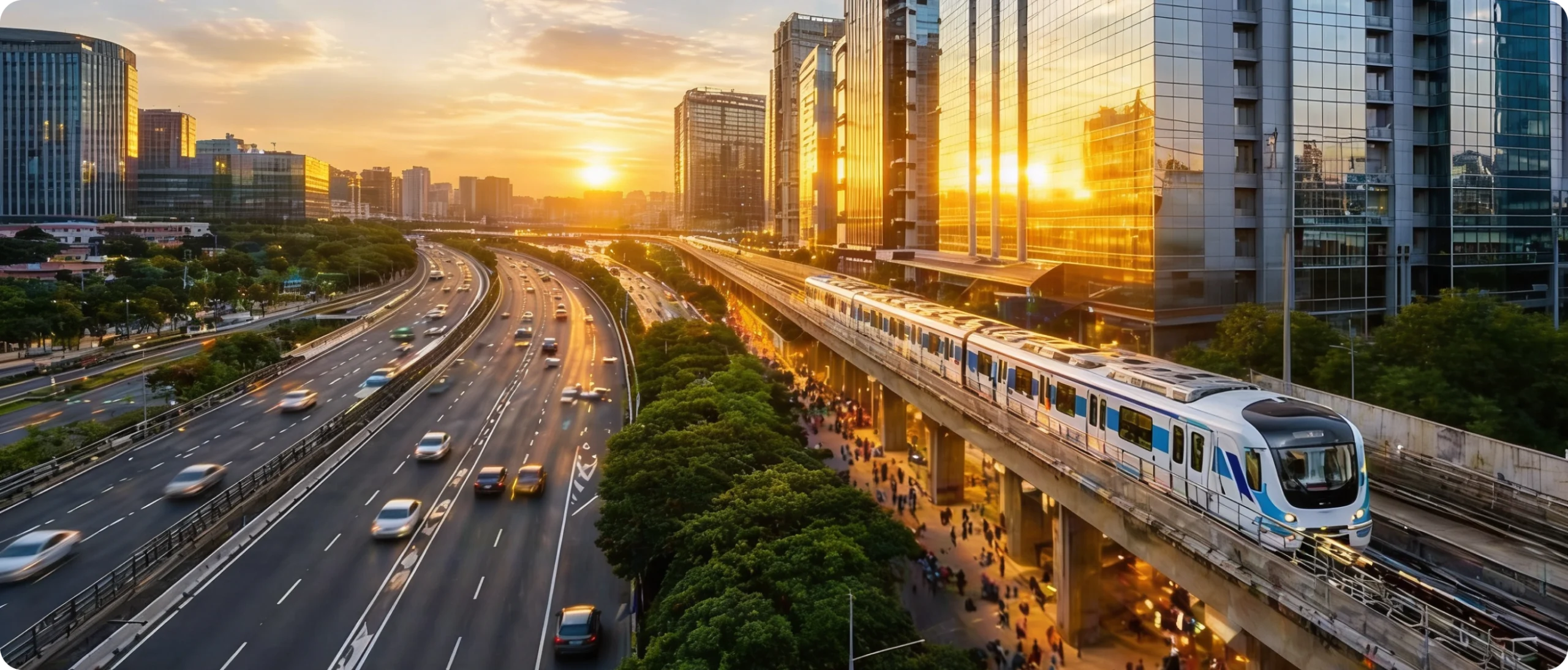
Noida Expressway and DND Support Faster Noida-Side Movement
For buyers living or working around central Noida, the Noida–Greater Noida Expressway and DND Flyway remain major advantages. They support quicker movement toward key office belts, South Delhi access routes, and sectors linked to the expressway corridor, which is why Noida often feels more efficient for this side of NCR.
Aqua Line Strengthens Noida’s Internal Metro Reach
The Aqua Line adds another practical layer to Noida’s daily connectivity story. NMRC describes it as a 29.7 km corridor with 21 stations, which makes it especially useful for movement between Noida and Greater Noida. For buyers who value structured metro access, this gives Noida a clear urban mobility advantage.
Jewar Airport Adds a Long-Term Connectivity Advantage
Noida also benefits from the future impact of Noida International Airport at Jewar. Its first phase has been designed for 12 million passengers per year, which gives the region a stronger long-term travel and infrastructure edge. This may not affect every daily routine immediately, but it does expand Noida’s future access profile in a major way.
NH-9 Gives Ghaziabad Strong Everyday Road Access
Ghaziabad feels more practical for many buyers because of NH-9 and its well-used Delhi-facing road movement. For people whose routine involves frequent travel toward East Delhi or older NCR corridors, this route often saves time in a more immediate and visible way than future-facing infrastructure alone.
Metro and Namo Bharat Improve Ghaziabad’s Regional Reach
Ghaziabad’s connectivity has become stronger with metro access and the Delhi–Meerut Namo Bharat corridor. NCRTC reported that the integrated network has been operational since February 2026, covering 23 stations across the corridor and metro section. This gives Ghaziabad a serious advantage for cross-city and regional movement.
Hindon Airport Adds a Smaller but Useful Local Benefit
While it does not carry the same long-term scale as Jewar, Hindon Airport still adds a useful layer to Ghaziabad’s connectivity story. AAI describes it as a domestic civil enclave, which gives the city an additional point of air access and strengthens its overall movement ecosystem for selected routes.
Delhi Access Shapes the Final Difference
The real answer depends on where daily life is centred. Noida often works better for buyers linked to expressway sectors, Greater Noida, and airport-led future growth. Ghaziabad usually feels more practical for those who depend on Delhi access, highway movement, and fast regional links already functioning today.
Schools, Hospitals and Daily Essentials Checklist
When reviewing Noida, check for these practical advantages
- Smooth access to DPS for a manageable school routine
- Reasonable reach to Pathways if premium education is a priority
- Dependable proximity to Fortis for routine and urgent care
- Added medical support through Kailash Hospital
- A residential setting where daily errands stay within easy reach
- Shorter and more predictable routes between home, school, and healthcare
- Sector planning that helps regular movement feel more organized
When reviewing Ghaziabad, check how well daily life is already supported
- Comfortable school access around DPS Indirapuram
- Reliable healthcare reach through Yashoda and nearby major hospitals
- Everyday convenience around the Shipra Mall belt
- Better access to active services, markets, and regular-use stores near Vaishali
- Easier handling of shopping, pharmacy visits, and routine needs
- A neighbourhood that already feels settled rather than still taking shape
- Daily support systems that work well without relying too much on future development
Before deciding, use this final checklist
- Is the school commute realistic on a normal weekday
- How quickly can a trusted hospital be reached in actual traffic
- Are groceries, pharmacy, and daily essentials conveniently placed
- Does the surrounding area support a comfortable routine beyond the apartment itself
- Will everyday movement feel manageable after shifting, not just during a site visit
- Does the location reduce friction across school, healthcare, and basic errands
The Better Choice Depends on What You Want From Daily Living
There is no single winner between Noida and Ghaziabad because both cities solve different residential priorities. Noida often feels stronger for buyers who value planned sectors, smoother urban structure, and long-term infrastructure visibility. Ghaziabad makes more sense for those who want better space, easier entry pricing, and a city that already supports everyday movement in a more immediate way.
The more practical choice comes down to how you want to live. If stronger layout planning, expressway access, and future-facing growth matter more, Noida naturally stands out. If your focus is on larger homes, budget efficiency, and daily comfort within a more established residential setting, Ghaziabad can feel more convincing. The decision is less about which city sounds better and more about which one fits your routine, priorities, and long-term comfort.
This is also where Prateek becomes relevant in the conversation. Across this wider Noida–Ghaziabad belt, it offers luxury flats at the price point where many buyers are still comparing standard premium flats, which changes the value equation in a meaningful way. For buyers looking at space, planning, and overall lifestyle together, that balance can make the final choice feel much clearer.