
Aarav and Nisha liked a 3 BHK flat quoted at ₹1 crore. The location worked for them. The builder’s payment plan looked manageable. Their bank had checked their income earlier, and the EMI estimate did not look too heavy.
So they planned around one simple thought: if the flat costs ₹1 crore, the home loan should cover a large share of that price.
Then the bank’s valuation came back lower than the builder quote.
The flat did not change. The tower did not change. The builder’s brochure did not change. The number changed because property valuation for home loan follows the bank’s reading of the flat, the documents, the market, the borrower profile, and the lender’s own policy.
That gap is where many buyers get stuck. A builder quoted flat price shows what the buyer is being asked to pay. A bank valuation report shows what the lender accepts for loan calculation. Those 2 numbers can sit close to each other, or they can create a cash gap the buyer did not plan for.
The buyer then has to ask sharper questions. Which value will the bank use? Which charges are eligible for loan calculation? How will the LTV ratio apply? How much margin money is needed? Has legal verification been done? Has technical valuation supported the price? Will the project stage affect disbursal?
This article explains those moving parts in plain language. It stays buyer-focused and informational. It is not financial advice, legal advice, or a promise of loan approval. Buyers should confirm case-specific numbers with their bank, loan officer, financial advisor, property lawyer, or registration professional before paying a large booking amount or signing the agreement.
Why The Flat Price And Loan Amount Can Differ
A buyer usually meets the builder’s number first. It comes on the cost sheet, in a site-office discussion, in a sales email, or through a payment plan. That number starts the buyer’s mental calculation.
A ₹1 crore flat feels like a ₹1 crore loan discussion. If the buyer has heard that banks fund a large share of the property cost, they may start planning around that rough figure. The trouble begins when the lender accepts a lower property value for loan calculation.
ICICI Bank explains through its bank valuation process page that after a property is identified, the lender performs legal and technical evaluation and checks current market value, location, infrastructure, growth potential, resale value, and construction progress for under-construction homes.
That is the first real difference between builder quoted price vs bank valuation. The builder’s quote can include the flat’s base price plus floor rise charges, preferential location charges, parking, club charges, maintenance deposit, GST where applicable, and other project charges. The bank can read the same cost sheet and separate the value it accepts from charges it does not fund, or funds only under its own conditions.
Take a simple buyer situation. The builder quotes ₹1 crore. The bank accepts the property value at ₹90 lakh. The loan is then worked out on the bank-accepted value, subject to LTV rules, lender policy, borrower profile, credit score, documents, and property type. The buyer could need more personal funds than expected, even when the loan file is moving.
A lower valuation does not automatically prove the builder has overcharged. It can come from market comparison, lender policy, comparable sales, construction stage, property age, documentation, resale demand, unit condition, or project approval status. Housing.com explains that lenders run property verification checks before deciding the loan amount, and those checks can affect the amount released.
This is why buyers ask, sometimes very late in the process, why home loan amount is lower than property price. The answer usually sits in the gap between the price the buyer has agreed to pay and the value the lender accepts for funding.
What Bank Valuation Means In A Home Loan
Bank valuation of property is the lender’s assessed value of the flat for loan purposes. It is usually done through a bank-appointed or lender-approved valuer, technical team, or valuation panel. The aim is lender-side risk assessment, not a certificate that the buyer is getting the best market price.
The property becomes security for the home loan. So the bank checks whether the flat, title, location, area, construction stage, building condition, and resale view can support the requested loan. Bajaj Finserv explains that the technical verification process can include property dimensions, structure, location, age, market value, builder credentials, and legal papers.
Home loan property valuation sits beside the borrower’s financial check. A buyer’s income and credit score may show repayment capacity. The flat still has to pass lender review. A buyer can be eligible for a certain amount on salary, while the property valuation reduces the amount the bank is willing to release.
Current Market Value
The bank may compare the flat with nearby transactions, locality rates, resale demand, project quality, amenities, and construction progress. A premium floor, view, or tower position can increase the builder quote, but the lender still checks whether the market supports that price.
Legal File Strength
The lender may study title papers, ownership chain, approvals, encumbrance certificate, tax receipts, builder rights, sale documents, and occupancy or completion papers where applicable. A clean borrower profile does not remove the need for a clean property file.
Technical Comfort
The valuer may check area, structure, construction quality, age of the building, plan match, site condition, and whether the unit exists as described. Kotak Bank’s legal and technical checks page also says buyers can ask whether the project is on the bank’s approved list.
Bank valuation of property for home loan can change by lender. One bank may be more comfortable with a project. Another may ask for more papers. A third may value the same property differently because its panel, comparable sales, policy, and risk view differ.
Buyers should ask when valuation will happen, whether the valuation is pending or complete, and whether the lender will share the reason if the accepted value comes lower. Some banks may share limited details, so the buyer should still keep the builder cost sheet, agreement draft, and own contribution plan ready.
What Builder Quoted Price Usually Includes
The builder’s quote is the number that gets attention because it looks like the flat price. But in many transactions, that quote is a bundle. It can include the apartment value, project charges, amenities, deposits, statutory costs, and handover-related payments.
A buyer may say, “The flat is ₹1 crore.” The bank may ask, “What part of that is the apartment value?” A Times of India guide on extra home costs lists charges buyers may face beyond the advertised price, including parking, maintenance, stamp duty, registration, GST where applicable, and brokerage.
| Cost Sheet Item | What It Usually Means | How Buyers Should Read It |
| Base price | The main apartment price, usually linked to area and rate per sq. ft. | Start here while checking flat price and loan eligibility. |
| Floor rise charges | Extra amount for higher floors. | Ask whether the lender treats this as part of eligible value. |
| Preferential location charges | Extra amount for park-facing, corner, club-facing, or better-view units. | The builder may charge it, while the bank still checks market support. |
| Parking charges | Amount linked to car parking, where charged separately. | Treatment can vary by lender and agreement structure. |
| Club or amenity charges | Charges for clubhouse, gym, pool, sports area, or project facilities. | These can raise the total outflow, even when the bank funds selected parts only. |
| Maintenance deposit | Advance deposit for maintenance or society use. | This often needs buyer cash planning. |
| GST, where applicable | Tax generally linked to under-construction property purchases, based on current rules. | Ask how the lender treats it while calculating eligible cost. |
| Registry and stamp duty | Charges paid to the government during registration. | HDFC Bank says stamp duty charges are state levies, and home loans usually do not cover stamp duty and registration fees. |
| Legal, documentation, utility, or handover charges | Smaller charges linked to paperwork, possession, meter connection, or society setup. | These can add up and shift into the buyer’s own contribution. |
Property valuation for flat purchase should start before the buyer pays a large booking amount. The buyer needs a full cost sheet, not only a headline price. The same sheet should go to the bank or loan officer so the buyer can ask which items are included in loan calculation.
This step also helps compare 2 projects better. One flat may show a lower base price and heavier add-ons. Another may look costlier first but carry fewer separate charges. The payable amount and the bank-accepted value both matter.
The Numbers Buyers Should Separate Before Booking

Flat buying becomes messy when every number is treated as the same number. The builder may quote one figure, the agreement may carry another, stamp duty may be calculated on another value, and the bank may approve the loan using its own valuation.
RBI’s RBI housing rules explain loan-to-value treatment for housing loans and the treatment of stamp duty, registration, and documentation charges in LTV calculation. The buyer still has to check lender policy, because loan amount, sanction terms, eligible cost, and document conditions vary by bank.
| Value Or Price Type | Who Provides It | What It Includes | How It Can Affect The Loan | Buyer Risk If Misunderstood |
| Builder quoted price | Builder or sales team | Base price, floor rise, PLC, parking, club charges, maintenance deposit, GST where applicable, and other project charges | The bank may review it, but selected items may be outside eligible value | Buyer assumes the full quote will be funded |
| Agreement value | Buyer and builder or seller | Sale value recorded in the agreement | The bank may compare it with valuation, documents, and policy | Buyer assumes agreement value guarantees loan amount |
| Registration or stamp duty value | State registration system or registration professional | Value used for stamp duty and registration | It affects ownership cost, but does not decide loan approval by itself | Buyer keeps too little cash for registry |
| Bank valuation | Bank or bank-appointed valuer | Lender’s assessed property value after legal and technical checks | It can affect the eligible loan amount under LTV and lender policy | Buyer receives less funding than expected |
| Loan-to-value ratio | Bank, under regulatory and internal norms | Percentage of the accepted property value the bank may fund | It decides how much of the accepted value may be financed | Buyer applies LTV to the builder quote by mistake |
| Sanction amount | Bank or lender | Borrower-level approval based on income, credit score, liabilities, age, and documents | It can carry conditions before disbursal | Buyer treats sanction as final release |
| Down payment and margin money | Buyer | Own contribution, valuation gap, and unfunded charges | Bank expects the buyer to arrange this before or during disbursal | Buyer faces cash pressure after booking |
| Non-fundable charges and buyer cash gap | Buyer’s budget reality | Stamp duty, registration, interiors, deposits, shifting, handover charges, or excluded items | These sit outside the loan or need separate buyer funds | Buyer underestimates the total money needed |
A ₹1 crore builder quote, ₹92 lakh agreement value, ₹90 lakh bank valuation, and lower loan amount can all appear in the same purchase. Home loan sanction amount and margin money for home loan should be checked together, because the gap decides how much cash the buyer needs.
ICICI Bank’s loan sanction process explains that property evaluation and verification form part of the journey after property identification. Buyers can ask the bank when valuation will happen, whether the valuation is final, and which cost-sheet items are being counted.
Before paying a large booking amount, buyers should ask the bank which cost items it will treat as eligible for loan calculation. This one question can expose a funding gap early.
How LTV Changes The Final Loan Amount
LTV ratio in home loan is the share of the bank-accepted property value that a lender may finance. The phrase “bank-accepted value” matters. A buyer may be looking at the builder’s ₹1 crore quote, while the lender may apply LTV to a lower accepted value after valuation.
RBI’s LTV ratio rules set housing loan LTV treatment by loan size bands. The circular also says stamp duty, registration, and documentation charges should generally be excluded from housing property cost for LTV calculation, with a limited exception for homes costing up to ₹10 lakh.
Here is a safer way to read the math:
| Item | Illustrative Amount | How It Affects The Buyer |
| Builder quoted flat price | ₹1,00,00,000 | This is the price the buyer sees first. |
| Bank-accepted property value | ₹90,00,000 | The lender may use this value for loan calculation. |
| LTV treatment | Depends on loan band, lender policy, borrower profile, and documents | The bank does not need to apply LTV to the full builder quote. |
| Possible loan amount | Could fall below what the buyer expected | The final number depends on accepted value and the lender’s conditions. |
| Buyer contribution | Down payment, margin money, registry cost, stamp duty, and excluded charges | The buyer has to arrange this from approved personal sources. |
Suppose the bank accepts the property value at ₹90 lakh. If the lender funds around 75% to below 80% of that accepted value, subject to the file and policy, the loan could sit roughly between ₹67.5 lakh and just under ₹72 lakh. If the borrower profile, documents, project status, or lender rules are stricter, the number can move again.
HDFC Bank’s home loan guidelines page says LTV ratios can differ by property value band and notes that stamp duty and registration charges are excluded from LTV calculation. Buyers should check the exact band, eligible value, and lender treatment before planning the payment schedule.
The buyer’s question should be specific: “Which value are you using for LTV, and which charges are outside that value?” That answer gives a better view of the loan amount, margin money, and cash needed before agreement signing or disbursal.
Why The Sanctioned Loan May Be Lower Than Expected
A home loan moves through more than one checkpoint. A buyer can pass the income check, receive a sanction letter, and still wait for property review before the lender releases money. The sanction amount gives a view of borrower eligibility. Final disbursal depends on the borrower file and the property file moving together.
A typical flow works like this:
- Income And Profile Check
The lender reviews income, job or business stability, age, credit score, existing loans, repayment capacity, and submitted documents. - Sanction Based On Borrower Details
The home loan sanction amount is issued with stated terms. It can depend on salary, business income, credit score, current EMIs, co-applicant strength, and paperwork. - Property Document Submission
The buyer submits the agreement draft, title papers, approved plans, demand letter, payment schedule, allotment letter, builder documents, and other papers requested by the lender. - Legal And Technical Verification
The lender checks ownership, approvals, encumbrance, area, construction quality, property condition, and whether the flat matches the submitted papers. - Property Value Check
Home loan approval on property value depends on the lender’s accepted value, LTV treatment, risk view, and policy. This is where the bank’s valuation can reduce the funding number. - Disbursal Conditions
The bank may release funds after the buyer pays the required contribution, signs loan documents, completes property checks, and meets construction-stage conditions where applicable.
ICICI Bank describes the post-approval disbursal journey through application, documentation, approval, property verification, valuation, and disbursal. That sequence explains why a sanction letter and final funding can carry different numbers.
Credit profile also matters. Bank of Baroda’s credit score guide explains that credit score can affect a home loan file, and buyers should check their position before applying.
Two buyers buying similar flats can receive different loan outcomes. Income, credit score, liabilities, age, co-applicant strength, documents, property value, and chosen lender all matter. Buyers should ask which sanction conditions remain open before fixing tight payment dates with the builder.
Agreement Value, Market Value, And Registration Value
Agreement value, market value, and registration value often enter the same flat purchase. Each one does a different job. A buyer who treats them as one number can misread the purchase cost and the loan amount.
Agreement Value
Agreement value is the sale value written in the agreement between the buyer and the builder or seller. The total amount paid by the buyer can still include GST where applicable, parking, maintenance deposit, legal charges, stamp duty, registration, or other charges outside the agreement structure.
Market Value
Market value is the price the property may fetch based on location, demand, supply, condition, amenities, age, and recent sales of similar flats. A lender may study this while doing bank valuation of property for home loan, because the flat becomes loan security.
Registration Value
Registration value is tied to stamp duty and registration under state rules. For Uttar Pradesh buyers, the Stamp and Registration Department’s property registration portal gives access to property registration services, valuation list details, and related registration information. Buyers in other states should check the relevant state registration portal or speak with a registration professional.
Bank Valuation Of Property
Bank valuation may use agreement value, market value, legal papers, technical checks, location, property age, and lender policy. Kotak Bank’s property assessment process explains that lenders can review documents, technical details, APF status, and market value before approving a home loan.
A buyer may sign an agreement at one value, pay registration charges based on local rules, and receive loan funding based on the bank’s accepted value. This is why the agreement draft, cost sheet, registration estimate, and bank valuation stage should be checked together.
Ready, Under-Construction, And Resale Flats Are Checked Differently
Property type changes the bank’s reading. A ready-to-move flat gives the lender a finished unit to inspect. An under-construction flat brings project progress and stage-wise release into the file. A resale flat needs a closer look at title chain, age, maintenance, existing mortgage status, seller papers, and society records.
RBI’s circular refers to construction stage disbursal for under-construction or greenfield housing projects, so buyers should ask when funds will be released and what proof the lender needs. Buyers in Uttar Pradesh can use the official UP RERA portal to check project registration and project details where available.
| Property Type | What The Bank May Check | Why Valuation May Differ | Buyer Risk |
| Ready-to-move flat | Completion status, occupancy certificate where applicable, flat condition, area match, locality rates, resale demand, and documents | The bank can inspect the finished unit and compare it with nearby transactions | Buyer assumes the ready price will match the lender’s value |
| Under-construction flat | Project approval, builder record, construction stage, sanctioned plan, payment schedule, RERA details, and approved project status | Under construction flat home loan valuation may depend on project comfort and work completed at site | Buyer expects full disbursal before the bank’s allowed stage |
| Resale flat | Title chain, seller ownership, building age, upkeep, society papers, tax receipts, existing loan or lien, and local demand | Resale flat valuation may move with age, condition, documents, and local resale rates | Buyer misses repair cost, document gaps, lien issues, or lower resale comfort |
Under construction flat home loan valuation also affects timing. The buyer may receive loan approval, but money can come in stages. In a resale deal, the lender may ask for more papers from the seller, society, previous owner, or local authority before it confirms value.
For under-construction homes, buyers should check project registration number, promoter name, sanctioned plan details, completion timeline, carpet area, and payment schedule. For resale homes, they should check ownership history, dues, society NOC where applicable, and whether the property is already mortgaged.
Legal And Technical Checks Behind Bank Valuation
A lender studies the property through legal verification and technical valuation in home loan. Legal verification checks ownership and document strength. Technical valuation checks the physical flat, building, area, construction quality, and market value.
Both checks can affect home loan approval on property value. A buyer’s income may look strong, but the file can slow down if title papers are missing, the approved plan differs from the site, the flat area is unclear, or the property value does not support the requested loan. Bajaj Finserv says legal verification checks may cover title, ownership, approvals, encumbrance, sale deed, tax receipts, and possession documents.
| Check Type | What The Bank Usually Studies | Why It Matters To The Buyer |
| Legal verification | Title papers, ownership chain, sale deed, encumbrance certificate, approved plan, tax receipts, possession papers, builder or seller rights, and loan history where relevant | The lender checks whether the property can safely support the loan file. |
| Technical verification | Site condition, area, dimensions, structure, location, building age, construction quality, market value, plan match, and builder credentials | The lender checks whether the property matches documents and supports the requested value. |
Technical valuation in home loan matters more when the buyer is using a high loan share. If the brochure, agreement, and site measurements do not match, the bank may ask for clarification before finalizing bank valuation of property. In resale flats, the valuer may look at building age, lift condition, common areas, repairs, and nearby resale rates.
Tata Capital’s property valuation report explainer lists documents such as title deed, agreement to sell, encumbrance certificate, approved building plan, occupancy certificate where applicable, RERA registration details, floor plans, and construction stage certificate where needed.
Buyers should keep these papers ready before locking a tight payment date. If the agreement signing date is close and property verification is still pending, the buyer should ask the lender whether disbursal can happen on time.
Bank-Approved Projects Still Need Unit-Level Checks
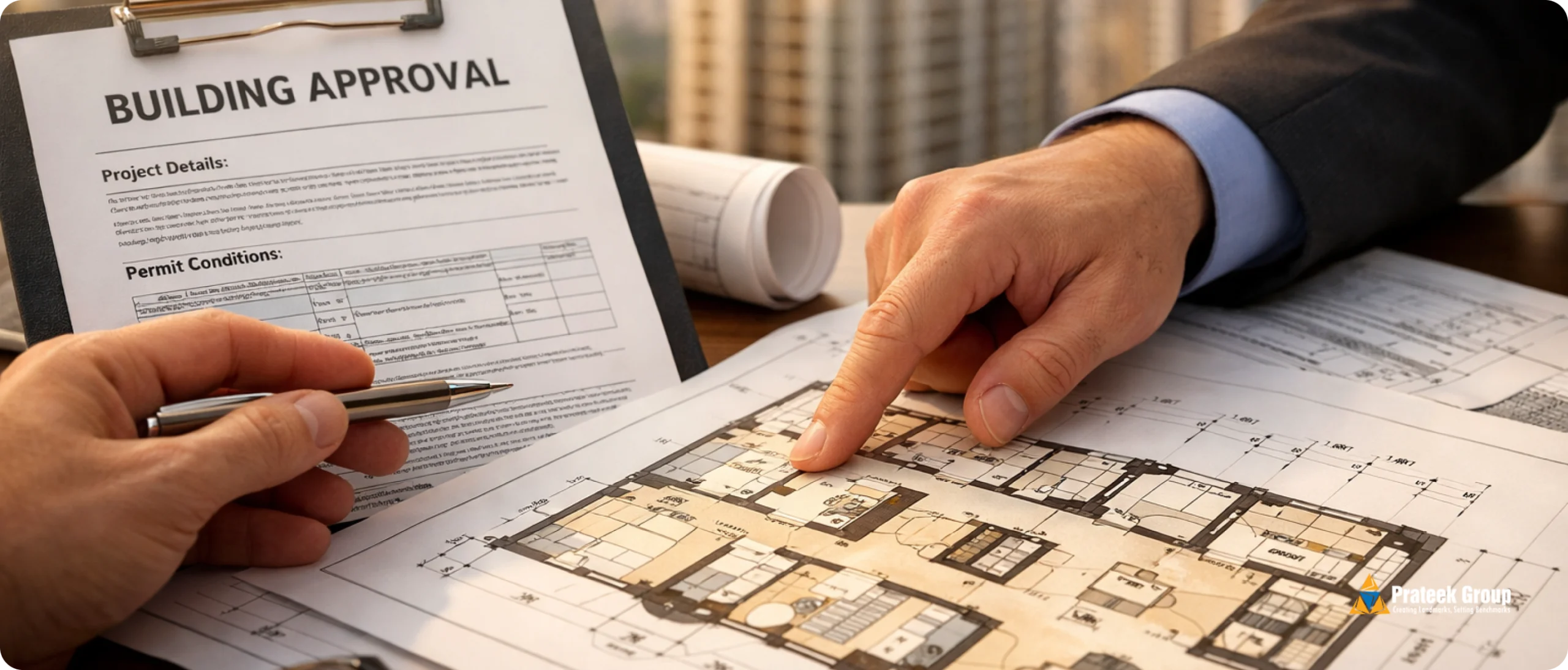
A bank-approved project can make processing easier because the lender may have reviewed some project papers earlier. It should not be read as a blanket promise that every unit, tower, cost item, borrower file, and payment stage will pass without questions.
Kotak Bank’s approved project checks mention that buyers can ask for an APF number or check if the project is on the bank’s approved list. A builder tie-up is a sales claim until the buyer confirms current APF or project status with the lender.
Mistake: Assuming Project Approval Covers Every Unit
Fix: Ask the lender whether your tower, phase, floor, and unit are covered. In large projects, different towers can have different approval stages, possession timelines, or document status. Builder quoted price vs bank valuation can still change if the bank reads the unit-level cost, area, or stage differently.
Mistake: Checking The Builder Tie-Up Only With The Sales Team
Fix: Speak directly with the bank or loan officer. A builder may mention several bank tie-ups, but the buyer should ask the lender about current approval status, pending documents, eligible cost, and disbursal stage.
Mistake: Treating Income Eligibility As Purchase Comfort
Fix: Check flat price and loan eligibility with the property value. The bank may approve the borrower for one amount based on income, then release another amount after valuation, document review, and LTV checks.
Mistake: Ignoring Cost-Sheet Items Because The Project Is Approved
Fix: Ask which parts of the builder quote the bank may consider. ICICI Bank’s loan disbursal steps show that property verification, valuation, and disbursal come after the property is identified.
The buyer can ask the builder, the bank, and a registration or legal professional the same money question: “What is the total cash I must arrange before disbursal?” The answer usually reveals whether the booking amount, agreement value, bank valuation, and own contribution are moving together.
The Buyer Cash Gap That Appears After Valuation
A lower valuation can change cash planning even when the loan continues. The builder may ask for the next payment, the agreement may be ready, and the bank may still process the file. The pressure starts when the buyer learns that the remaining amount must come from personal funds.
Scenario 1: The Builder Quote Is Higher Than The Bank Value
A buyer books a flat for ₹1 crore. The bank accepts the value at ₹92 lakh. If the expected loan drops by ₹6 lakh, that ₹6 lakh usually shifts into the buyer’s own contribution. Margin money for home loan rises, and the buyer may need to add savings, bring a co-applicant, adjust the budget, or ask the builder for more time after speaking with the lender.
Scenario 2: Charges Sit Outside Eligible Value
The builder sheet may include floor rise, PLC, parking, club charges, maintenance deposit, GST where applicable, and other charges. Some may raise the total outflow, while the bank may still calculate funding on its accepted value. This is a common reason behind the question: why home loan amount is lower than property price. HDFC Bank explains that registration cost rules differ by state and need separate budgeting.
Scenario 3: Income Eligibility Is Fine, But Cash Is Short
A buyer may qualify for a home loan sanction amount based on salary, credit score, age, and repayment capacity. If the bank valuation is lower than the builder quote, the buyer’s own contribution can rise. The same can happen when registry, interiors, maintenance deposit, shifting cost, or handover charges were left out of the first budget.
Bajaj Housing Finance explains through its home loan margin page that buyers usually pay their own contribution before the loan is disbursed. This makes cash timing as relevant as EMI comfort.
Buyers should avoid increasing personal contribution without checking EMI comfort, emergency funds, family obligations, and other financial commitments. A loan can look manageable on paper while the purchase becomes tight because too much cash is locked before possession.
Margin money for home loan should be checked before the agreement stage when the buyer is stretching the budget. The buyer can ask which charges are eligible, how much own contribution is needed, when it must be paid, and whether valuation is final.
Questions To Ask Before Paying The Booking Amount
Booking amount looks small against the full flat cost, but it starts the buyer’s payment timeline. Before paying it, the buyer should ask direct questions about cost, documents, valuation, refund terms, and loan timing.
Bajaj Housing Finance’s loan verification process says lenders may verify and value the real estate property to arrive at the final loan amount they are comfortable providing. That makes the booking stage a good time to ask sharper questions.
Cost Sheet Questions
- What is the base price of the flat?
- Which charges are extra: PLC, floor rise, parking, club, maintenance deposit, GST where applicable, legal charges, handover charges, or society charges?
- Is the quoted price all-inclusive, or will registration, stamp duty, and other charges come later?
- Can the builder give a written breakup before token payment?
Loan Coverage Questions
- When will the bank complete property valuation for home loan?
- Which parts of the builder cost sheet may the lender consider?
- Will the bank look only at agreement value, or also at selected approved charges?
- How much own contribution must be paid before disbursal?
Project And Unit Questions
- Is this exact tower, phase, floor, and unit covered under the lender’s approved project status?
- Do the flat details match the UP RERA project details or the relevant state RERA record available for buyers to check?
- Are any approvals, documents, or construction-stage conditions still pending?
- Can the builder share the APF number or bank-approved project detail in writing?
Area And Document Questions
- What is the carpet area, and does it match the agreement draft?
- Are the sale agreement, sanctioned plan, demand letter, payment schedule, and title documents ready for bank review?
- Has the bank completed bank valuation of property for home loan, or is it still pending?
Cash Buffer And Booking Questions
- What should the buyer keep aside for stamp duty, registration, GST where applicable, interiors, shifting, and possession charges?
- How will flat price and loan eligibility change if bank valuation comes lower?
- Will the builder payment schedule give the bank enough time for verification and disbursal?
- Is the booking amount refundable if the lender’s valuation is lower than expected?
- What happens if bank disbursal is delayed because of missing or pending documents?
The final answers should come from the bank, loan officer, property lawyer, financial advisor, or registration professional where needed. A written cost sheet, refund wording, and a lender response reduce confusion before the buyer moves from interest to commitment.
What Buyers Can Do When Bank Valuation Is Lower
A lower bank valuation of property changes the funding plan. The buyer should first understand which number changed and why. The gap may come from valuation, excluded charges, legal papers, technical review, construction stage, market comparison, borrower profile, or lender policy.
- Ask What Affected The Valuation
Ask whether the lower value came from comparable sales, construction stage, legal papers, technical inspection, area mismatch, building age, resale demand, or project status. Kotak Bank’s property valuation process explains that lenders may review documents, technical details, APF status, and market value before approving the loan. - Check Which Cost Items Were Excluded
Builder quoted price vs bank valuation becomes clearer when the buyer separates the cost sheet. Base price, floor rise, PLC, parking, club charges, maintenance deposit, GST where applicable, stamp duty, and registration may sit in one quote, while the bank may accept selected items. - Compare Another Lender’s Reading Carefully
Another bank may read the same file differently because policy, valuation panel, project comfort, and borrower profile can change the result. Buyers should remember that repeated applications can create credit enquiries, so the comparison should be planned and limited. - Check LTV And Own Contribution Again
LTV ratio in home loan should be checked against the bank’s accepted value. RBI’s housing loan rules explain LTV bands and treatment of stamp duty, registration, and documentation charges in housing loan calculations. - Discuss Price Or Payment Timing
If valuation is lower because nearby market evidence does not support the quote, the buyer can discuss price, payment timing, or cost-sheet items with the builder or seller. This depends on the deal, project demand, booking terms, and negotiation room. - Rework Margin Money Before The Next Payment
Margin money for home loan can rise when the bank funds less than expected. The buyer should calculate the remaining cost, statutory charges, interiors, possession payments, and a cash buffer before paying the next instalment. - Review Documents With The Right Person
A property lawyer can check title, approvals, agreement wording, and document gaps. A registration professional can explain stamp duty and registry value. A financial advisor can help the buyer judge whether higher cash contribution fits the household budget.
A buyer may still proceed when the numbers are manageable and the papers are clean. The better habit is to put the bank’s funding view, builder cost sheet, agreement draft, refund terms, and cash estimate in the same discussion before making the next payment.
FAQs
1. What Is Bank Valuation In A Home Loan?
Bank valuation is the lender’s assessed value of the property for loan purposes. The bank may check location, market value, documents, construction stage, resale comfort, and technical condition before deciding the eligible loan amount.
2. Why Can Builder Price And Bank Valuation Differ?
Builder price may include base price, PLC, floor rise, parking, club charges, maintenance deposit, GST where applicable, and other charges. Bank valuation focuses on the value the lender accepts after its legal and technical checks.
3. What Is Home Loan Property Valuation?
Home loan property valuation is the lender’s check of the property’s value before loan disbursal. It can include market comparison, site inspection, document review, construction stage, and lender policy.
4. Why Is Bank Valuation Lower Than Builder Price?
The gap can come from comparable sales, excluded charges, property condition, location, documentation, project stage, lender policy, or valuation method. Several causes can sit behind the same number difference.
5. Does The Bank Fund The Full Builder Quoted Flat Price?
The loan depends on borrower profile, bank valuation, LTV rules, lender policy, and documents. Buyers should ask which cost-sheet items the lender treats as eligible.
6. Why Is My Home Loan Amount Lower Than The Flat Price?
The amount can be lower when the bank values the property below the quote, excludes some charges, applies LTV limits, or finds borrower-level limits through income, credit score, liabilities, age, or repayment capacity.
7. What Is LTV Ratio In Home Loan?
LTV ratio is the share of accepted property value that the lender may finance. HDFC Bank’s home loan LTV explanation says ratios can differ by property value band and stamp duty and registration charges are excluded from LTV calculation.
8. What Is Margin Money For Home Loan?
Margin money is the buyer’s own contribution. It can include down payment, valuation gap, stamp duty, registration, interiors, maintenance deposits, and charges the bank does not fund.
9. Is Agreement Value The Same As Builder Quoted Price?
Agreement value is the sale value written in the agreement. Builder quoted price may include extra charges outside or around the agreement, depending on how the cost sheet is structured.
10. Is Registration Value The Same As Bank Valuation?
Registration value is linked to stamp duty and registration under state rules. Bank valuation is the lender’s loan-purpose value after its own property checks.
11. What Does Technical Verification Check?
Technical verification may check property size, construction quality, site condition, age of the building, area match, approved plan, and market value. The lender uses it to judge the property as loan security.
12. What Does Legal Verification Check?
Legal verification may check title, ownership chain, approvals, encumbrance, sale documents, tax receipts, builder rights, and other papers needed for the loan file.
13. Does A Bank-Approved Project Make Loan Approval Certain?
A bank-approved project may help with project-level review. Borrower profile, unit details, valuation, documents, payment stage, and current lender policy still matter.
14. How Does Bank Valuation Work For Under-Construction Flats?
Under-construction flat valuation can include project approval, RERA details, builder record, construction stage, payment schedule, and completion progress. Loan release may follow construction stages.
15. How Does Bank Valuation Work For Ready-To-Move Flats?
For ready flats, the bank may inspect the finished unit, occupancy status where applicable, area, condition, location, document set, and comparable resale values.
16. How Does Bank Valuation Work For Resale Flats?
For resale flats, the bank may check title chain, seller ownership, building age, society papers, tax receipts, existing loan or lien, physical condition, and local resale demand.
17. What Should Buyers Check Before Paying Booking Amount?
Buyers should check the cost sheet, agreement draft, bank valuation stage, likely loan amount, margin money, registry cost, project status, refund terms, and document readiness. Uttar Pradesh buyers can verify project records through UP RERA details, while buyers in other states should check the relevant state RERA portal.
18. Who Should Buyers Speak To Before Signing The Agreement?
Buyers should speak with their bank, loan officer, property lawyer, financial advisor, or registration professional where needed. This helps verify loan terms, document status, valuation treatment, stamp duty, refund terms, and cash contribution.