
The Weekday Test Every NCR Family Should Run Before Choosing A Home
The flat looks right on the first visit. The rooms are bright, the balcony gets morning light, the society has a play area, and the school is 6 km away. For many parents, this feels like the best location to buy a home in NCR for families, at least on paper. The real test starts on a regular Monday morning, when the child’s school timing and the parents’ office timing meet the same lift, gate, road, and traffic signal.
The child’s uniform is ready by 6.40 am. Breakfast is still on the table. The school bus reaches the society gate at 7.05 am, but the lift takes time because other children are leaving too. One parent has a 9 am call. The other parent needs to cross a busy stretch before office traffic builds. A home that looked easy during a Sunday site visit now has to carry the family through a real weekday.
This is where NCR homebuyers need to look beyond distance. A 5 km school route can feel tiring if the pickup point is outside the gate, the road near the school gets blocked during dispersal, or the bus drops the child late every day. A 14 km office route may still work if metro access is clean, cab availability is steady, or the parent works hybrid. Before trusting map distance, families can use traffic congestion data for New Delhi to understand how sharply road time can change during rush hours.
The child’s school route usually has less flexibility. The bus comes at one time. Assembly starts at one time. Half-days, exams, PTMs, and activity days add more movement. Young children also feel travel differently. A long ride before school can make them sleepy in class, and a late drop can eat into lunch, rest, tuition, or play time.
The parent’s office route has a different rhythm. Some offices allow early starts, late starts, hybrid days, metro travel, or carpooling. Some offices stay strict about reporting time. A parent working in Gurugram, Noida Expressway, Sector 62, Connaught Place, or Cyber City should try the route during real office hours instead of trusting the travel time shown during a quiet site visit.
A good home-location decision starts with separate route checks. Pick the school route and office route separately. Try both during the hours your family will travel. Add school bus gate access, parent return time, tuition route, grandparents nearby, rainy-day delays, and weekend access to parks, markets, clinics, and daily services. By the time the family has checked these small movements, the flat starts showing its real weekday score.
Why School Commute And Office Commute Work On Different Clocks
Parents often ask whether they should choose a home near school or office. The answer depends on the family’s daily clock. A child’s day starts earlier and has less room for delay. A parent’s office route may offer more options, but it can still affect dinner time, homework help, and evening pickup.
Fixed School Timing
School timing is firm. A nursery child cannot shift the bus timing, and a Class 5 child cannot change the route order. For Delhi families, school admission criteria can also make neighbourhood distance part of the school-location discussion, especially during early-year admissions.
More Office Backup Choices
Office travel may allow early leaving, metro use, carpooling, cab booking, or a hybrid workday. A parent can compare road and rail choices through the Delhi Metro map before assuming that a longer road distance will always feel harder. This is why a family should judge office access by time, route quality, and backup options.
Daily Energy At Home
A young child may feel the effect of even 15 extra morning minutes. A parent may handle a longer office trip if the return route stays predictable. The better family location is the one that protects the child’s energy and still lets parents return in time for homework, dinner, and sudden school messages.
Age Changes The Decision
A preschool family may give more weight to school distance. A family with teenagers may care more about coaching centres, safe metro access, and late-evening movement. A 2-parent working household may need a middle location where both office routes remain manageable.
The Same Route At Different Hours
A route that feels easy at 11 am can feel different at 7.20 am or 6.30 pm. Before booking, try the school-morning route, the school-return route, and both parent office routes during actual travel windows. The family will usually see whether a school-first, office-first, middle, or rail-linked location suits its routine.
The Family Commute Decision Matrix
Once a family starts comparing the best residential areas in NCR for families, the question should move from “Which area is popular?” to “Which daily routine can this home handle?” Use this matrix before shortlisting a flat. For projects in Uttar Pradesh, families can check RERA project details before treating location comfort as the final reason to book.
| Family Situation | School Commute Concern | Office Commute Concern | Better Location Response |
| Child In Nursery To Class 2 | The route shapes the morning mood at home. A long bus ride can make the day start too early. | One parent may still handle a longer office trip if the route is predictable. | Give more weight to a short school route, gate pickup, and fewer bus stops. |
| Child In Class 3 To Class 8 | School still matters, but tuition, sports, and hobby classes add extra trips. | Evening office return affects homework, dinner, and activity pickup. | Choose a location where school and after-school movement stay in the same daily zone. |
| Child In Class 9 To Class 12 | Coaching, exams, later classes, and independent travel become part of the route. | Parents still need a steady return plan, especially during exams. | A balanced or rail-linked home can work if the school route stays steady. |
| One Parent Works Hybrid | The child travels daily while the parent travels on fewer office days. | Office-day travel still needs a proper peak-hour check. | A school-first location can work if office access remains manageable on fixed workdays. |
| Both Parents Travel Daily | Pickup, drop, homework support, and dinner time depend on 2 office routes. | Long return routes for both parents can stretch the whole evening. | A middle location may work better than choosing only school or only office. |
| One Parent Works Late | Evening support matters as much as morning travel. | Late cabs, society security, and caregiver access become part of the location choice. | Choose a home where school access and evening support both function. |
| Family Depends On Grandparents | Emergency pickup and half-days can become easier if grandparents are close. | Parents may accept a slightly longer office route if support is dependable. | A support-led location may reduce daily strain more than a shorter office route. |
| Family Uses School Bus Daily | First pickup, last drop, and waiting point matter more than map distance. | Parent routes should be checked around the same school timing. | Shortlist homes where the school bus already serves the society or nearby cluster. |
School-Age Lens: When The School Route Should Guide The Location
Nursery To Class 2
For younger children, the school route should stay simple. At this age, the child depends fully on parents, school bus staff, guards, drivers, and caregivers. If the bus comes too early or the pickup point sits outside the gate, the morning becomes harder before the school day begins.
For Delhi parents, school distance can also affect admission planning because many schools use distance point criteria while shortlisting entry-level applicants. A family with a young child should check school access before falling in love with a larger flat farther away.
Class 3 To Class 8
This stage needs more than a short school route. Children may have tuition, swimming, football, dance, music, or weekend classes. A home that keeps school close but pushes every activity across traffic can still make the week feel stretched.
Parents should check the return route too. Afternoon drop timing affects lunch, rest, homework, and the first activity of the evening. If both parents work, the home should also allow a caregiver, grandparent, or driver to handle a sudden half-day without crossing half the city.
Class 9 To Class 12
Older children may handle longer routes better, but their schedules often become heavier. Board classes, coaching, extra classes, project work, and exam travel can change the home-location decision. A home near a safe metro route, reliable cab zone, or coaching cluster may help a teenager more than a home that only sits close to school.
School transport still needs checking. CBSE’s school transport rules cover details such as school-bus marking, driver information, and safety requirements, so parents should ask how the school applies these rules on the actual route.
Coaching And Activity Years
A Delhi NCR home buying guide for families should include the child’s next 5 years, along with the current class. A child in Class 5 today may need coaching or late sports practice in a few years. A child in Class 10 may soon need easier travel to test centres, libraries, metro stations, or subject classes.
This is where a middle location can make sense. If the school route is steady, the office route is workable, and older children get safe movement options, the family may gain more from daily balance than from choosing the closest point to one destination.
Parent Office Routes: Daily Office, Hybrid Work, And Two Working Parents
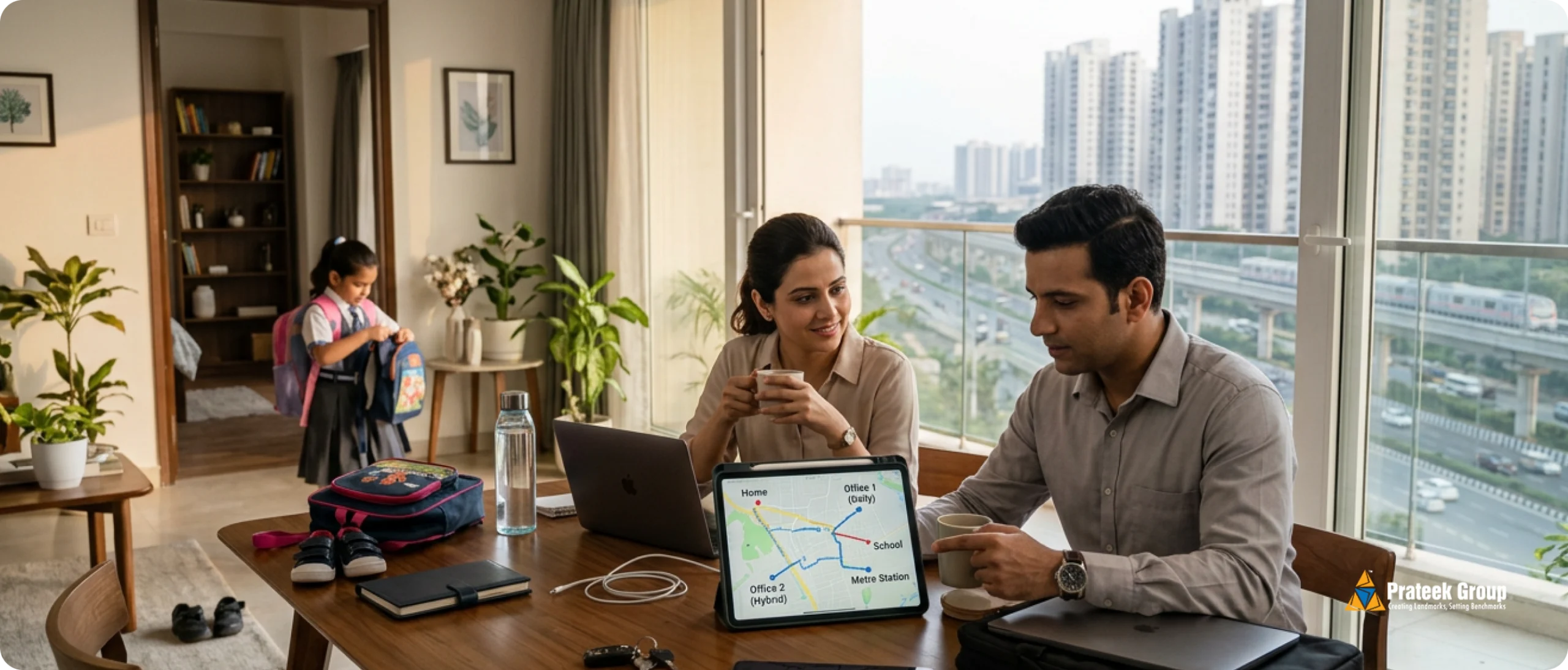
Office travel changes by job role, office days, and return timing. A parent going to Gurugram 5 days a week will judge location differently from a hybrid worker going to Noida twice a week. Recent NCR office leasing patterns show why families should also check where work hubs are growing before they lock a home around today’s office route.
Daily-Office Parent
This parent needs a route that stays usable on most weekdays. If the child is young, a school-first home can still work, but the parent should try the evening return before deciding. A 35-minute morning office trip that becomes 90 minutes in the evening can affect homework, dinner, and pickup support.
Two-Parent Office Load
A 2-parent working family should compare both office routes, not only the shorter route or the higher salary route. If both parents cross tough traffic zones at the same time, the family needs a stronger support plan at home. The better location keeps at least one parent close enough to respond during half-days, fever, or sudden school messages.
Hybrid Work Pattern
Hybrid work can make a school-first home more practical because the child travels every day while the parent travels fewer days. Office-day travel still needs a real route check. A family should look at cab access, metro time, and return traffic on the exact days the parent goes to office.
Gurugram Office Corridors
Families linked to Cyber City, Golf Course Road, Sohna Road, NH-48, or Dwarka Expressway should check evening return time with care. The GMDA mobility projects reported for Gurugram show how bus shelters, e-bus depots, and corridor work can affect movement over time. For a homebuyer, the daily check remains simple: route to office, route back home, and backup during late meetings.
Late Working Hours
A parent returning after 8 pm should check cab availability, society gate access, lighting, and family support. A home closer to office may reduce late travel, while a home closer to school may help the child’s routine. The better choice is the one where the late-working parent and the child both have dependable movement.
School Bus, Pickup, Drop, And The Last 300 Metres
A school can be close on the map and still feel difficult every morning. The real test is the bus stop, society gate, service road, school gate, and return timing. Before choosing between a home near school or office, families should ask these questions during the site visit, school visit, and resident conversations.
Does The Bus Enter The Society Gate?
If the bus stops outside, the child may need to cross an internal road, service lane, or crowded gate area. This small detail can change the daily school route, especially for younger children who need adult support from the lift to the pickup point.
What Are The First Pickup And Last Drop Timings?
A nearby school may still mean an early pickup if the bus route starts from your society. Ask the school for the route order, not only the travel distance. First pickup and last drop often decide how tired the child feels before and after school.
Where Does The Child Wait During Rain Or Heat?
The waiting point should have safe walking access, lighting, shade, and enough space for children and parents. Delhi Traffic Police shares school safety guidelines that parents can use while checking road behaviour around children.
How Crowded Is The School Gate During Dispersal?
Visit during afternoon pickup if possible. A Gurgaon survey on school zone safety reported concerns around crossings, footpaths, pickup bays, and speed control near schools, so the last 300 metres deserve a real look.
Who Handles Half-Days And Sudden Pickup?
Half-days, exams, PTMs, sports events, and sudden fever calls can disturb the routine. Ask who picks the child up, where cars wait, how long the exit takes, and whether a grandparent, driver, or caregiver can manage the trip.
Where Does This Fit In The Buying Notes?
Add school bus gate access, pickup timing, drop timing, and school-gate safety to the same buying notes where you compare price, floor, club, and view. These checks sit inside the family’s weekday routine, so they deserve space before the booking decision.
Metro, RRTS, Expressway, And Office Corridor Access
A farther home can still suit a family if the travel backup is strong. Check road, metro, RRTS, school bus, expressway entry, and last-mile access together. For Noida and Greater Noida, families can compare the Noida Metro route with the school and office map before judging the home only by road distance.
| Access Point | What Families Should Check | Why It Matters | Stronger Location Signal |
| Society Gate To Main Road | Check lift rush, gate exit, cab pickup point, e-rickshaw access, and school bus stopping point. | The first 10 minutes often decide whether the route feels smooth or rushed every morning. | The child, parent, cab, and school bus can all move without crowding the same gate. |
| Home To Metro Station | Check walking time, e-rickshaw time, station crowding, parking, and late-evening return comfort. | A nearby station is useful only when the last-mile route is safe and predictable. | The station can be reached easily in school hours, office hours, and after dark. |
| Home To Expressway Entry | Check service-road traffic, signal delays, U-turns, and time needed to reach the expressway ramp. | Expressway access can look strong on a map but still fail if the entry stretch is slow. | The family reaches the expressway without crossing a crowded school or market stretch. |
| Home To RRTS Or Rail Link | Check station approach, drop-off point, feeder access, and return route from the station. | Rail helps working adults, older children, and grandparents only when the station link is practical. | The station route works during rain, late evening, and weekday rush. |
| Office Corridor Access | Check morning exit, evening return, cab wait, parking, and traffic near the business district. | Office travel affects dinner, homework, pickup support, and late meetings. | The parent has at least 2 usable options, such as road plus metro or cab plus carpool. |
| Cross-City Family Movement | Check Delhi, Ghaziabad, Gurugram, Noida, or Meerut-side movement based on family needs. | Many NCR families travel for grandparents, hospitals, coaching, and weekend duties. | The home gives workable routes for school, office, and family support, not only one destination. |
Families looking at Ghaziabad, Delhi-side areas, or Meerut-linked movement should also check NCRTC corridor details before depending on a rail-led plan.
How Known Builder Projects Fit Into A Family Commute Decision
A builder project should be judged through weekday life, not only tower design, clubhouse photos, or flat size. For NCR families, the better question is simple: does the project location help with school timing, office travel, school bus access, metro reach, expressway movement, childcare support, and weekend needs?
| Builder | Project To Mention | Location | Why It Fits This Blog | What Families Should Check |
| Prateek Group | Prateek Canary | Sector 150, Noida | This project can fit a Noida family-location discussion because Sector 150 connects with Noida Expressway, school belts, sports zones, and planned residential growth. | Check school bus route, Noida Expressway entry time, metro or feeder access, activity centres, and evening return from office. |
| ATS Infrastructure | ATS Knightsbridge | Sector 124, Noida | This project can be used for families comparing Noida-Greater Noida Expressway access with school and office routes. | Check morning school traffic, office route toward Delhi or Noida Expressway, pickup timing, and daily service access. |
| DLF | DLF The Arbour | Sector 63, Gurugram | This project fits a Gurugram office-route example because Sector 63 connects with Golf Course Extension Road and nearby office belts. | Check evening return after 6 pm, school pickup support, late cab access, and route toward Cyber City or Golf Course Road. |
| M3M India | M3M Golfestate | Sector 65, Gurugram | This project can be used when explaining how office-heavy Gurugram families should balance work access with school and activity routes. | Check school bus availability, Golf Course Extension traffic, nearby healthcare, activity centres, and support for late-working parents. |
| Tata Housing | Tata Eureka Park | Sector 150, Noida | This project can fit a Sector 150 family-housing comparison where buyers are checking school access, open surroundings, and Noida-side office movement. | Check school routes, Noida Metro or feeder access, Expressway timing, and daily errands around the sector. |
| ABA Corp | Cleo County | Sector 121, Noida | This project can be used for families looking at established Noida sectors with school, market, hospital, and office access nearby. | Check school bus entry, Sector 121 traffic, nearby tuition access, healthcare, and return routes from Noida or Delhi offices. |
Budget Versus Location Comfort
Price matters in NCR, but daily time has a cost too. A family may save money by moving farther out, then spend more on fuel, cabs, drivers, tuition travel, and lost evening time. Rising NCR housing prices make this choice sharper, so families should judge location through both budget and weekday comfort.
The School-First Family
This family pays more for a shorter child route. It can work well when the child is young, the school bus reaches the society gate, and one parent has a manageable office route. The family should still check office return time because a short school route will not help much if both parents reach home too late for homework, dinner, or pickup support.
The Space-First Family
This family chooses a larger home in a farther sector or township. The decision can work if school bus timing is steady, expressway entry is quick, and the parent office route does not break the evening routine. Before paying, buyers should also check UP RERA details where the project falls under Uttar Pradesh, because a cheaper or larger home still needs clean verification.
The Rail-Linked Family
This family chooses a middle area with metro, RRTS, or strong road fallback. It may not sit closest to school or office, but it can support older children, working parents, grandparents, and weekend movement. This option works best when the last-mile ride is safe and predictable.
The Support-Led Family
This family gives weight to grandparents, daycare, a trusted driver, or relatives nearby. A slightly longer school or office route can become manageable if pickup, half-days, illness, and late meetings have support. Family help should be treated as part of the location value, especially in homes with young children or senior citizens.
The Rental-And-Resale Family
School access can help future demand in family-heavy belts, especially where transport, safety, and daily services also work. A home near schools may attract tenants with children, but school access alone should not decide value. Project quality, maintenance, legal status, road access, and public transport still matter when judging long-term resale or rental appeal.
Buyer Mistakes Families Make While Judging Commute
The family visits the sample flat on a Sunday afternoon. The road is clear, the main gate looks calm, and the broker says the school is only 10 minutes away. They like the balcony, discuss the payment plan, and almost forget to drive the same road at 7.20 am on a school day.
What The Family Planned
They planned around distance. The school was close by kilometres, and the office route looked manageable on the map. They also assumed the school bus would stop near the tower and that the evening office return would take the same time every day.
What The Family Missed
They missed the route order of the school bus, the afternoon drop timing, and the traffic build-up near the school gate. They also missed the parent office-route overlap: both parents had to cross busy roads during the same morning window. Families can read New Delhi traffic patterns to see why peak-hour movement needs a separate check.
What They Should Check Before Buying
They should drive the school route during morning pickup and afternoon return. They should ask whether the bus enters the gate, where the child waits during rain, and how long the last drop takes. They should also compare the school-or-office location choice with both parents’ work timing, tuition access, childcare support, and evening return comfort.
The Second Common Miss
Many families forget the activities after school. A child may have football twice a week, tuition 3 times a week, or weekend classes in another sector. If these trips sit far from home, the child’s evening can become as tiring as the school route.
Daily Schedule Audit Before Shortlisting A Home
A family should run a day on paper before choosing the flat. Start with the child, then add both parents, support systems, and evening errands. This turns the NCR property buying checklist into a real weekday plan instead of a list of amenities.
| Daily Slot | What To Write Down | Route Or Support Check | Better Home Signal |
| Child Morning Line | Wake-up time, lift wait, tower exit, bus arrival, gate movement, and school start time. | Check whether the school bus reaches the gate and whether the waiting point is safe in rain or heat. | The child can leave without a rushed tower-to-gate walk or unsafe road crossing. |
| Child Return Line | School dispersal, bus drop, lunch time, rest time, homework time, and tuition start. | Check last drop timing, half-day plan, and who opens the door when parents are away. | The child gets enough time for lunch, rest, homework, and evening classes. |
| Parent One Line | Office start time, road route, metro route, cab wait, parking time, and evening return. | Use the Delhi Metro planner if this parent depends on metro fallback. | The parent has a stable morning route and a return route that supports family time. |
| Parent Two Line | Second office route, work timing, meeting pressure, return timing, and pickup role. | Check whether both parents get stuck during the same school or office traffic window. | One parent can respond faster during half-days, fever, school calls, or pickup delays. |
| Support Line | Grandparents, nanny, daycare, driver, doctor, and emergency pickup timing. | Check their route during school-return hours, not only during a quiet afternoon. | Support can reach the home without crossing a long or unreliable route. |
| Evening Line | Tuition, sports, music, grocery, pharmacy, clinic, and market trips after 6 pm. | Check whether these trips need a car every time or can happen within a short local radius. | The family can finish daily needs without adding another tiring commute after office. |
Weekend Livability, Grandparents, Childcare, And Activity Centres

A good weekday route is only one part of the decision. The best residential areas in NCR for families also need support around the home: grandparents, daycare, markets, clinics, parks, activity centres, and safe short trips. Families looking near Yamuna Expressway-side growth can read the YEIDA master plan before assuming every future connection will arrive quickly.
Grandparent Access
Grandparents can help during half-days, fever, school events, late meetings, and sudden pickup calls. If they live in Ghaziabad, Delhi, Noida, or Gurugram, check their travel route during afternoon school hours. A location with family support nearby can sometimes work better than a location that only saves one office route.
Childcare And Daycare Access
Daycare, nanny access, society staff reliability, and nearby caregiver support matter when both parents work. Ask residents how families handle exam days, holidays, and sudden school closures. This is especially useful for young children who cannot travel alone.
Tuition And Activity Access
Noida homes for families may work well when school, sports, music, coaching, and daily errands sit in the same belt. If every activity needs another long drive, the child’s evening can become as tiring as the school route. The same check applies in Greater Noida, Ghaziabad, Gurugram, and Delhi-side areas.
Health And Emergency Access
Families should time the route to a hospital or clinic during evening traffic, not only check distance on a map. This is more important for homes with small children, senior citizens, or grandparents nearby. Pharmacies and small clinics should also be reachable without a long drive.
Parks, Markets, And Services
A park inside the society helps, but weekend access to open spaces also matters. Grocery, pharmacy, milk, vegetables, repairs, salons, and small clinics should not need a long drive every time. For Ghaziabad homes, Ghaziabad planning updates can also help buyers check local notices, schemes, and civic information around the area.
Weekend Family Movement
Many NCR families spend weekends visiting relatives, attending classes, going to hospitals, or handling household work. A home location should keep these trips manageable, especially when school and office routes already take up most weekdays.
The Five-Route Test Before You Shortlist The Home
Before booking, sit with the family calendar and check 5 routes. Do this before comparing floor plans or club photos. A home that works on these routes will usually work better for the family’s weekday life.
Home To School Route
Run this during real school timing. Check when the child leaves the tower, where the bus waits, how crowded the gate gets, and whether the route crosses a busy road. If the child is young, give extra weight to bus comfort and safe waiting space.
School Back To Home Route
The return route decides lunch, rest, homework, and tuition timing. Ask the school for last drop timing and check the pickup area during dispersal. A short distance can still feel long if the bus route has too many stops.
Parent One Office Route
Check the route during the real office window. Add cab time, parking time, walk time, and traffic near the office entry. Road distance alone can hide these smaller delays.
Parent Two Office Route
Many families check only one office route. That creates an uneven load at home. If both parents work, compare morning exit, evening return, school pickup support, and who can respond faster during half-days or sudden school calls.
Support System Route
Add grandparents, daycare, tuition, hospital, activity centres, and weekend markets to the route check. If the family has a Gurugram or Delhi-side office connection, road changes like the Dwarka Expressway update can also help while checking long-term movement between home, work, and family support.
FAQs
Is It Better To Buy A Home Near School Or Office In NCR?
Choose based on the child’s age, parent work routine, bus timing, and support system. For younger children, school access often matters more. For 2 working parents, a balanced location may work better if both office routes and the school route stay manageable.
How Much School Commute Is Acceptable For Young Children?
Keep it short and predictable. Check pickup time, last drop, waiting point, and road safety. A 20-minute route with gate pickup can feel easier than a 10-minute route where the child waits outside the society gate.
How Should Parents Check Commute Time Before Buying A Home?
Try the school route during morning pickup and afternoon return. Try the office route during peak traffic and evening return. Repeat the route once during rain or a busier weekday if the location depends heavily on road travel.
Should Families Check School Bus Availability Before Booking?
Yes. Ask whether the bus enters the society gate, where children wait, and what the first pickup and last drop timings are. This can change the daily routine more than the distance between home and school.
Are Noida Homes For Families Practical If Parents Work In Delhi Or Gurugram?
They can be practical if school access, metro distance, and office route timing work together. Families should check the Noida Expressway, Sector 62, Delhi link, and metro route during real travel hours before deciding.
Is Greater Noida Family Housing Practical For School-Going Children?
It can work when school bus timing is steady and expressway access is easy. Parents should check first pickup, last drop, activity-centre distance, and parent office return time before booking a larger home farther out.
Are Ghaziabad Homes For Families Good With RRTS And Metro Access?
Ghaziabad can suit families linked to Delhi, Noida, Anand Vihar, Vaishali, or Indirapuram. Use NCRTC corridor details to check RRTS access, then check the last-mile route between the station and home.
Which Gurugram Family Locations Work For Office-Going Parents?
Areas near Cyber City, Golf Course Road, Sohna Road, NH-48, and Dwarka Expressway can help office-going parents. The family should still check school access, evening return time, late cab availability, and pickup support.
What Should An NCR Property Buying Checklist Include For Families?
Add school route, office route, school bus gate access, metro distance, hospital access, grocery runs, grandparents, childcare, tuition, and RERA checks. Gurugram buyers can verify projects through Haryana RERA projects before trusting possession claims.
How Should Buyers Check RERA For Noida, Greater Noida, Or Ghaziabad?
For Uttar Pradesh projects, buyers can search UP RERA projects before paying a booking amount. Match the project name, promoter name, registration number, phase, possession date, and approvals with what the sales team shares.
Does School Access Affect Rental And Resale Value?
Good school access can support future demand in family-heavy locations. Buyers should still check project quality, maintenance, transport, safety, legal status, and local supply before assuming that school proximity alone will protect value.
How Should Hybrid Workers Choose A Home Location In NCR?
Hybrid workers can give more weight to the child’s daily school route because the office trip happens fewer days. The office-day route still needs a peak-hour check, especially if it involves Gurugram, Noida Expressway, or central Delhi.
Should Grandparents And Childcare Support Affect Home Location?
Yes. A nearby support system helps during half-days, illness, late meetings, school events, and sudden pickup calls. For many NCR families, this support reduces daily pressure more than a slightly shorter office route.
Is Metro Access Useful For School-Going Children?
For younger children, metro access helps parents, caregivers, and older siblings more than the child. For teenagers, safe metro access can help with coaching, exams, library visits, and independent travel.
Should Families Choose A Cheaper Home Farther Away?
A farther home can work if school bus timing, office access, expressway entry, metro backup, and family support are strong. The family should calculate fuel, cab cost, driver cost, tuition travel, and evening time along with the property price.
What Is The Best Way To Compare Two Shortlisted Homes?
Run both homes through the same weekday check. Compare school pickup, afternoon drop, both parents’ office routes, activity travel, hospital access, weekend errands, and support from family or caregivers. The better home should make the full week easier, not only the site visit better.