
A Budget does not always change real estate through one loud announcement.
Sometimes, it matters because it keeps the direction steady.
That is what Union Budget 2025 real estate watchers saw in 2025-26. The Budget did not reset the sector overnight. It continued the larger policy line around housing delivery, stalled projects, urban infrastructure, tax relief, and city-led growth.
That matters because real estate moves slowly.
A housing project needs land, approvals, finance, construction, sales, delivery, and registration. A city needs roads, water, sanitation, public transport, and jobs before a new residential pocket can feel livable. So when Budget 2025 real estate sector announcements touched stuck homes, city building, and homeowner tax relief, the impact was not limited to builders.
It also spoke to people waiting for possession, owners holding more than 1 home, and developers trying to complete projects stuck due to funding stress.
The biggest housing signal was SWAMIH Fund 2. Hindustan Times reported the ₹15,000 crore SWAMIH announcement for stalled housing projects, aimed at completing another 1 lakh housing units.
Tax relief also came into the picture. Business Standard reported that homeowners can claim nil annual value for two self-occupied properties without earlier conditions.
The broader sector reading was captured by ET Realty, which said Budget 2025-26 had real estate impact through urban infrastructure, housing, investment, and tax changes.
So the story is clear.
Union Budget 2025-26 real estate announcements did not try to create noise. They continued the policy direction already visible in housing support, city building, project completion, and tax simplification.
For buyers, that means more attention to possession and ownership comfort.
For builders, it means the government still wants cleaner delivery, better urban planning, and stronger confidence in organised housing.
What policy continuation means for real estate
Policy continuation sounds like a dull phrase.
In real estate, it is not dull at all.
It means the government is not treating housing as a one-year issue. It is keeping support around the same hard problems: delayed homes, city infrastructure, middle-income housing, and tax rules that affect property owners.
Budget 2025 housing sector announcements show this clearly. The government did not speak only about new homes. It also looked at stuck homes, future cities, and tax pressure on people who already own property.
| Budget direction | What it means for real estate |
| SWAMIH Fund 2 | More support for stalled housing projects India |
| Urban Challenge Fund | More focus on city redevelopment, water, sanitation, and growth hubs |
| Two self-occupied homes tax relief | Simpler tax treatment for people with 2 homes |
| Affordable and mid-income housing support | Continued attention on housing that affects many buyers |
| Infrastructure push | Better roads, city services, and connectivity can support future housing demand |
The official Budget summary said the government would set up an Urban Challenge Fund of ₹1 lakh crore for Cities as Growth Hubs, Creative Redevelopment of Cities, and Water and Sanitation, with ₹10,000 crore proposed for 2025-26.
That matters because urban development Budget 2025 announcements are tied to future real estate demand. Better city services can make newer residential pockets easier to live in. Poor infrastructure can weaken even a well-built project.
SWAMIH Fund 2 is another part of the same policy line. ET Realty reported that the SWAMIH Fund 2.0 announcement was aimed at reviving delayed affordable and mid-income housing projects.
For property owners, the tax change is more personal. Economic Times explained that homeowners can claim nil annual value for up to two properties, reducing the old notional rent pressure on a second self-occupied home.
This is why real estate policy continuation matters.
It gives the sector a steadier frame. Stalled projects get attention. Cities get future funding. Homeowners get simpler rules. Builders get a clearer signal that delivery and urban planning will stay part of the policy conversation.
SWAMIH Fund 2: why stuck homes got Budget attention?
A stalled project hurts more than a slow market.
Someone may have booked a home 6 years ago, taken a loan, paid EMIs, paid rent, and still waited for possession. For that person, Union Budget 2025 real estate support is not a policy headline. It is about whether the flat can finally get completed.
That is why SWAMIH Fund 2 matters.
Budget 2025-26 announced a ₹15,000 crore second fund to help complete stalled affordable and mid-income housing projects. Hindustan Times reported the ₹15,000 crore SWAMIH plan as a step aimed at completing 1 lakh more homes.
Moneycontrol explained that the second SWAMIH fund is meant to provide last-mile funding to stressed projects, especially where construction can restart with a final financial push.
This is useful because many stalled housing projects in India are not always dead projects. Some are stuck because the developer ran out of money near the last stage. Some have buyers, land, structure, and approvals, but need funding to finish construction.
What SWAMIH Fund 2 may help with
- Stuck projects that need last-mile money
- Buyers paying both rent and EMI
- Developers who need funds to complete construction
- Affordable and mid-income housing projects under stress
- Market confidence in delayed housing pockets
The buyer still has to stay careful.
SWAMIH support does not mean every delayed project will automatically get completed. A Times of India guide on SWAMIH Fund 2 explains that the fund works for eligible stalled projects and supports last-mile financing, which means project-level checks still matter.
Before feeling safe, buyers should ask:
- Is the project eligible for SWAMIH support?
- Has funding actually been approved?
- Is construction visible on site?
- Has the revised delivery timeline been shared?
- Is the project RERA-registered?
- Are dues, litigation, or approvals still pending?
For homebuyers Budget 2025 brought a real signal: stuck housing is still on the policy table. But the buyer should connect the policy with the exact project, not assume relief only because the Budget mentioned a fund.
Urban Challenge Fund: the city-building side of real estate
Real estate does not grow only inside project gates.
A good apartment can still feel difficult if the road floods, the water supply is weak, the drain is broken, or the commute takes too long. That is why the Urban Challenge Fund becomes part of the real estate Budget 2025 India story.
Budget 2025-26 announced a ₹1 lakh crore Urban Challenge Fund for Cities as Growth Hubs, Creative Redevelopment of Cities, and Water and Sanitation. ET Realty reported the Urban Challenge Fund with ₹10,000 crore proposed for 2025-26.
For real estate, this matters because housing demand follows city quality.
A new residential location becomes easier to sell when roads, water, sanitation, transport, and public spaces improve. A premium project also needs the surrounding city to work. Otherwise, buyers pay for the flat and then struggle outside the gate.
Fortune India’s Budget coverage said the real estate sector saw gains through SWAMIH and urban measures, even though the Budget did not give every direct relief the industry wanted.
What the Urban Challenge Fund can mean for real estate
- Better city infrastructure around housing pockets
- More support for redevelopment
- Stronger water and sanitation planning
- Better public spaces in growing cities
- More demand around improved urban corridors
- Higher confidence in organised residential markets
This is the “blueprint for future” part of the topic.
Urban development Budget 2025 announcements are not only about government spending. They shape where people may want to live 5 years later. A city with better roads, water systems, and public services can support stronger housing demand than a city where every new project depends only on private amenities.
The infrastructure push real estate story should be read like this: Budget money may not reduce the price of a flat tomorrow, but better city planning can improve location quality over time.
That matters for buyers, builders, and local authorities.
What does tax relief mean for property owners?
Budget 2025 property tax changes may not sound exciting at first.
But for many property owners, this part of the Budget is easier to feel in real life. A person may own one home in the city of work and another in the hometown. Someone else may keep a second home for parents, children, or future use.
Earlier, the second house could create notional rent confusion. The owner could end up dealing with tax on a house that was not actually rented out.
Union Budget 2025-26 made this easier. Business Standard reported that taxpayers can now claim nil annual value for two self-occupied properties, without the earlier riders.
Economic Times also explained that this second house relief removes the notional rental income burden for many owners who use both homes for personal reasons.
The Budget also raised the TDS threshold on rent. Business Standard’s property tax changes report said the annual rent limit for TDS was increased from ₹2.4 lakh to ₹6 lakh.
How this helps property owners
- A second self-used home becomes easier to hold.
- Tax compliance becomes less confusing.
- Families with homes in 2 cities get relief.
- Rental TDS pressure reduces for many landlords and tenants.
- The rule may support second-home and long-term ownership sentiment.
This does not mean people should buy a second home only for tax relief.
The better reading is simple: Budget 2025 made property ownership a little less rigid. For real estate, that supports confidence among people who already own property or plan to hold more than 1 home in the future.
What builders should take from policy continuation?
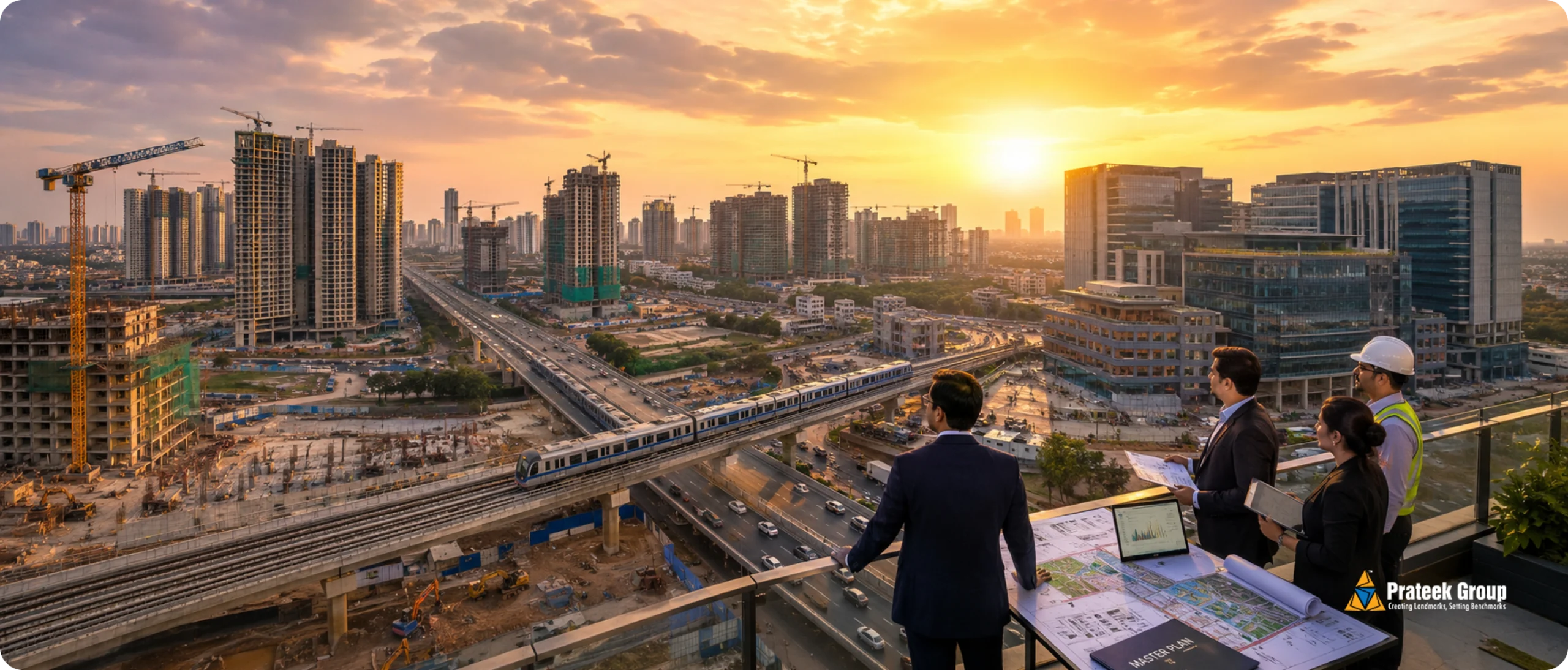
Builders did not get every demand they wanted in the Union Budget 2025-26.
There was no big direct tax cut for developers. There was no sudden fix for approval delays. There was no single announcement that removed every cost pressure from real estate.
But the Budget still gave builders a clear message: finish homes, work with better city planning, and build in markets where infrastructure can support demand.
ET Realty’s real estate Budget coverage said the sector gained from urban infrastructure, housing, investment, and tax-related measures. That is a continuation signal, not a one-day boost.
Fortune India’s sector Budget view also showed why developers welcomed SWAMIH, the Urban Challenge Fund, and homeowner relief even when some industry demands remained open.
For organised NCR developers, including Prateek Group, this policy direction matters because buyer trust is now linked to delivery, location quality, and project clarity. Recent coverage of Prateek Group’s Q4 FY26 sales shows how demand is moving toward developers with active residential portfolios and stronger homebuyer confidence.
What builders should read from the Budget
- Stalled projects need completion, not fresh promises.
- Urban infrastructure will shape future housing demand.
- Buyers will keep checking delivery history.
- Tax relief can support ownership sentiment.
- Better city services can make new locations easier to sell.
- Organised developers may benefit if they keep paperwork and timelines clean.
For builders, the Budget is a reminder to stay practical.
Land, approvals, funding, construction, delivery, and after-possession support still decide buyer confidence. Policy can support the sector, but trust is built project by project.
What homebuyers should take from Budget 2025?
Budget 2025 housing sector announcements should be read with a practical mind.
The Budget did not make homes cheaper overnight. It did something more specific. It tried to reduce stress around stuck projects, support future city growth, and make property ownership a little easier for people with 2 self-used homes.
For people waiting in delayed projects, SWAMIH Fund 2 is the biggest point. Mint explained that the SWAMIH Fund 2 scheme is aimed at helping middle-class families who are paying EMIs for booked apartments and rent for their current homes.
NDTV also reported the ₹15,000 crore fund announcement to complete 1 lakh homes in stalled projects. That gives delayed-project buyers a policy signal, but it does not remove the need for project-level checks.
Devdiscourse’s Budget coverage also connected the TDS rental change with rental investments and stalled-project revival, which matters for owners, landlords, and buyers watching the rental market.
What buyers should do now
- Check whether a delayed project has actually received SWAMIH support.
- Ask for revised construction and possession timelines.
- Verify RERA status before trusting any new promise.
- Calculate EMI, rent, registration, maintenance, and parking together.
- Read tax relief on 2 self-occupied homes with a CA before buying again.
- Treat infrastructure plans as future support, not current comfort.
- Visit the project during traffic hours, not only on a quiet Sunday.
For homebuyers, Budget 2025 gives one useful message: policy can support the market, but the final decision still sits inside the project file, site visit, location, and payment plan.
Why organised developers may gain from this Budget direction?
Budget 2025 real estate sector measures also say something about developer behaviour.
The policy direction favours completion, cleaner finance, city infrastructure, and buyer confidence. That can help organised developers because they usually have better documentation, clearer project structures, and stronger access to funding.
Deccan Herald reported that the SWAMIH Fund 2 announcement followed the first fund’s work in completing stalled projects across India. That is useful for the market because every completed stuck project restores some confidence.
SquareFeat India’s Budget reading said the combination of tax relief and urban measures can support real estate, but the sector still wants deeper reforms like home loan deduction support and faster approvals.
For NCR developers, this is where Prateek Group can be mentioned lightly. The article is not about one builder, but organised developers with active residential portfolios may benefit when buyers start valuing delivery, paperwork, location quality, and long-term maintenance more seriously.
Real Estate Mumbai also described the Budget’s housing and infrastructure measures as support for the sector through stalled-project funding, homeowner relief, and city growth.
What organised builders should read from this
- Delivery will matter more than launch noise.
- Stalled-project funding keeps buyer protection in the policy frame.
- Urban development can make future locations stronger.
- Tax relief may support ownership sentiment.
- Clean paperwork will remain a selling point.
- Buyers will compare builder credibility more carefully.
- Developers with transparent project details may gain trust faster.
The Budget’s future blueprint is not only about government spending.
It also tells builders what kind of market is coming: one where buyers want homes delivered properly, cities planned better, and developers held to clearer expectations.
What the Budget still leaves for future reform?
Union Budget 2025-26 gave the real estate sector support, but several industry asks remained open.
That is not unusual. Real estate has deep problems that cannot be fixed through one Budget speech. Approval delays, GST input credit issues, affordable housing limits, funding access, land costs, and project-level compliance still affect buyers and builders.
Before the Budget, industry groups and experts had asked for deeper support. Moneycontrol reported that the sector wanted industry tag and single-window clearance, along with tax rebate on housing loan interest and GST input credit changes.
Hindustan Times also reported that the real estate sector had sought a higher affordable housing limit through affordable housing tax support, asking for the current ₹45 lakh cap to move closer to ₹75 lakh or ₹1 crore in some markets.
A Times of India pre-Budget report on Times of India said real estate leaders wanted higher tax deductions, stronger funding, and industry status recognition to support affordable housing.
What still needs attention
- Faster project approvals
- Better clarity on GST input credit
- Wider affordable housing price limits
- Higher home loan interest deduction
- Single-window clearance for large projects
- More rental housing support
- Clearer incentives for green buildings
- Better funding access for mid-sized developers
This is where the “future blueprint” part becomes important.
Budget 2025 continued the policy line, but the next steps will decide how much easier real estate becomes for buyers and builders. SWAMIH can help stuck projects. Urban funding can improve cities. Tax relief can help property owners. But approval speed, project cost, and affordable housing limits still need more work.
How buyers and builders should read the future blueprint?
A Budget is not a buying guide by itself.
It is a signal.
Union Budget 2025 real estate announcements tell buyers and builders where policy support is moving: stalled project completion, urban infrastructure, property tax simplification, and city-led growth. The next step is to connect these signals with real projects and real locations.
Moneycontrol’s report on the Urban Challenge Fund said the government announced ₹1 lakh crore for redevelopment of cities, with ₹10,000 crore allocated for 2025-26. That points to future demand in cities where infrastructure and redevelopment actually move on the ground.
Financial Express also reported the SWAMIH Fund allocation of ₹15,000 crore for completing 1 lakh units in stalled projects. For buyers, that is useful only when the specific project gets support and construction restarts.
A report by Financial Express said Budget 2025 gave homebuyers more savings, tax perks, and stalled-project support, but the benefit still depends on how these measures are used.
Buyer reading
- Check the project, not only the Budget headline.
- Verify RERA status and construction progress.
- Ask whether SWAMIH support applies to the exact project.
- Calculate tax benefit with a CA.
- Check city infrastructure around the project.
- Avoid buying only because a location is mentioned in policy talk.
Builder reading
- Delivery will matter more than launch claims.
- Cleaner approvals and documentation will help sales.
- Urban infrastructure can open new markets.
- Buyer trust will depend on visible progress.
- Organised developers can gain if they keep timelines and paperwork clean.
For organised NCR developers, including names such as Prateek Group, the Budget’s message is clear without making the article builder-led: buyers will keep rewarding clarity, delivery, and location quality.
The blueprint is useful only when it reaches the ground.
What Union Budget 2025-26 really says about real estate?

Union Budget 2025-26 did not try to sell real estate one big dream.
It stayed with the direction already visible in housing policy: finish stuck homes, improve cities, reduce some tax friction, and keep future growth tied to better infrastructure.
That matters because real estate is slow by nature. A home takes years to approve, finance, build, sell, hand over, and register. A city takes even longer to fix. So policy continuation can be useful when it keeps attention on the problems people actually face.
For stuck-home buyers, the SWAMIH Fund 2 announcement matters because it gives another funding route for delayed affordable and mid-income projects. For city growth, the Urban Challenge Fund matters because housing demand depends on roads, water, sanitation, redevelopment, and public services outside the project gate.
For property owners, the tax change on two self-occupied homes makes ownership a little easier to manage.
This is why the Budget works as a blueprint for the future.
It does not remove every issue. Approvals, GST input credit, affordable housing limits, funding cost, and delivery delays still need work. But it keeps the sector pointed toward completion, urban reform, and buyer confidence.
For organised developers, including Prateek Group as one NCR example, the signal is clear: buyers will keep rewarding delivery, clear paperwork, and practical location planning. The Budget can support the market, but trust will still be built one project at a time.
FAQs on Union Budget 2025-26 and real estate
1. What is the main real estate message from Union Budget 2025-26?
The main message is policy continuation.
The Budget continued support for stalled projects, urban development, homeowner tax relief, and infrastructure-led growth instead of announcing one dramatic reform.
2. What is the primary keyword for this blog?
The primary keyword is Union Budget 2025 real estate.
It fits the topic because people searching this phrase want to understand how the Budget affects housing, builders, cities, and property owners.
3. What is SWAMIH Fund 2?
SWAMIH Fund 2 is a ₹15,000 crore fund announced in Budget 2025-26 to support stalled affordable and mid-income housing projects.
Its aim is to help complete another 1 lakh housing units.
4. How does SWAMIH Fund 2 help homebuyers?
It can help buyers stuck in delayed projects if their project receives last-mile funding.
The buyer should still check whether the exact project has received approval, whether construction has restarted, and whether the revised timeline is clear.
5. Does SWAMIH Fund 2 apply to every stalled project?
No.
The project has to meet eligibility conditions. Buyers should not assume automatic support only because a project is delayed.
6. What is the Urban Challenge Fund?
The Urban Challenge Fund is a ₹1 lakh crore fund announced to support Cities as Growth Hubs, Creative Redevelopment of Cities, and Water and Sanitation.
It also had ₹10,000 crore proposed for 2025-26.
7. Why does the Urban Challenge Fund matter for real estate?
It matters because homes depend on the city around them.
Better roads, water, sanitation, redevelopment, and public services can make residential locations more livable and stronger over time.
8. What tax relief did Budget 2025 give property owners?
Budget 2025 allowed taxpayers to claim nil annual value for 2 self-occupied properties without earlier conditions.
This reduces notional rent pressure for many owners who use both homes personally.
9. Did Budget 2025 make homes cheaper?
No, the Budget did not directly reduce home prices.
It supported the sector through funding for stalled projects, city infrastructure, and tax simplification.
10. Did builders get direct relief in Budget 2025-26?
Builders did not get every demand they wanted.
But they gained from measures linked to stalled-project funding, urban infrastructure, property ownership sentiment, and future city development.
11. What did the real estate sector still expect from the Budget?
The sector expected wider reforms such as industry status, faster approvals, higher home loan interest deduction, GST input credit relief, and wider affordable housing limits.
Some of these asks remained open.
12. How does Budget 2025 affect affordable housing?
The Budget supports affordable and mid-income housing mainly through SWAMIH Fund 2 and continued policy attention to housing completion.
A wider affordable housing price limit was still an open industry demand.
13. What should buyers check after Budget 2025?
Buyers should check project RERA status, construction progress, funding support, possession timeline, payment plan, and location infrastructure.
Budget announcements should support due diligence, not replace it.
14. What should builders learn from Budget 2025?
Builders should focus on delivery, paperwork, funding discipline, and location quality.
The Budget direction supports organised development, but market trust depends on project execution.
15. How does this Budget affect organised NCR developers like Prateek Group?
It supports the kind of market where buyers value delivery, legal clarity, project quality, and location planning.
Prateek Group can be mentioned as one organised NCR developer example, but this remains a sector-wide Budget story.
16. Is Budget 2025 real estate policy good for long-term growth?
Yes, in a measured way.
The Budget supports long-term growth through stalled-project funding, urban infrastructure, tax simplification, and city redevelopment.
17. Why is this Budget called a blueprint for the future?
It gives future direction through city redevelopment, infrastructure funding, completion of delayed homes, and cleaner property ownership rules.
That is why the Budget is more about steady long-term support than a single headline reform.
18. What is the main takeaway for buyers?
The main takeaway is to stay hopeful but practical.
Budget 2025 can support the real estate sector, but every buyer should still check the exact project, location, builder record, RERA details, and payment plan before booking.